Mixed Recycling at the Monroe County Recycling Center
For more than 30 years, Monroe County residents have enjoyed a progressive and convenient curbside recycling program. Since opening in 1992, the Monroe County Recycling Center (MCRC) has served as the backbone of our local residential recycling system. Owned by Monroe County and operated by WM, the MCRC receives recyclables from haulers across the region. Inside the facility, materials are sorted and baled, then sold to processors and manufacturers who convert them into new products—keeping valuable resources out of landfills and helping to advance a circular economy. A strong, sustainable recycling program depends on many connected pieces—especially residents participating and recycling correctly. Monroe County’s accepted recycling items are listed below, and even more resources are provided above.
Acceptable Items in MCRC Recycling Program
Acceptable Paper Items
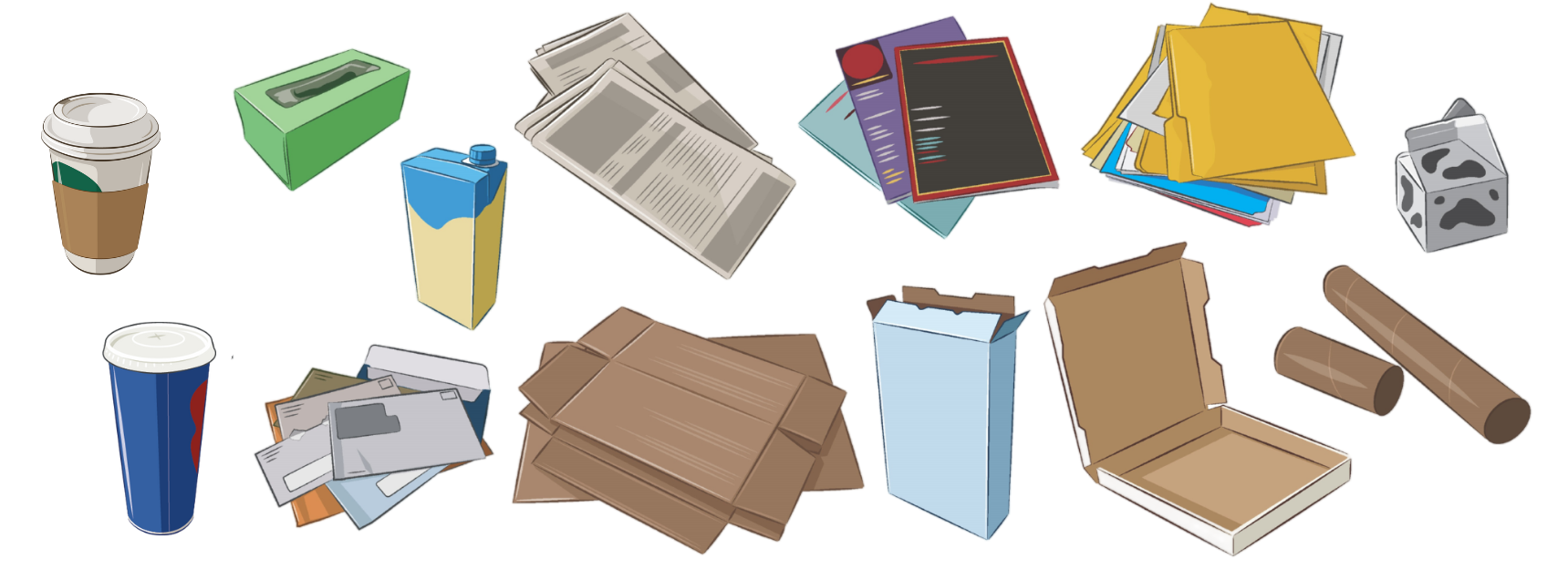
- Paper Cups (Hot and Cold): Empty all contents, reattach lids, and leave paper sleeve on hot cups for recycling. Discard straws/stir sticks in trash.
- Gable Top (Milk and Juice) Cartons and Drink/Soup Boxes: Remove and throw away plastic straws; reattach caps for recycling.
- Newspapers, Magazines, etc.
- Home Office Paper, Files, School Papers, etc.: Shredded paper in brown paper bags only.
- Junk Mail, Advertisements and Brochures
- All Envelopes: Window envelopes too!
- Corrugated Cardboard: Flatten, 2x4 feet maximum (Do not bundle or tie together)
- Phone Directories, Catalogs, and Soft-cover Books: Divide into 1/2 inch thick sections
- Paper Boxes—cereal, cracker, soda, tissue, shoe, gift, toy, etc.: Flatten box and recycle any plastic liners at grocery store with other plastic bags.
- Pizza Boxes: Discard all contents and flatten.
- Paper Egg Cartons
Acceptable Plastic Items
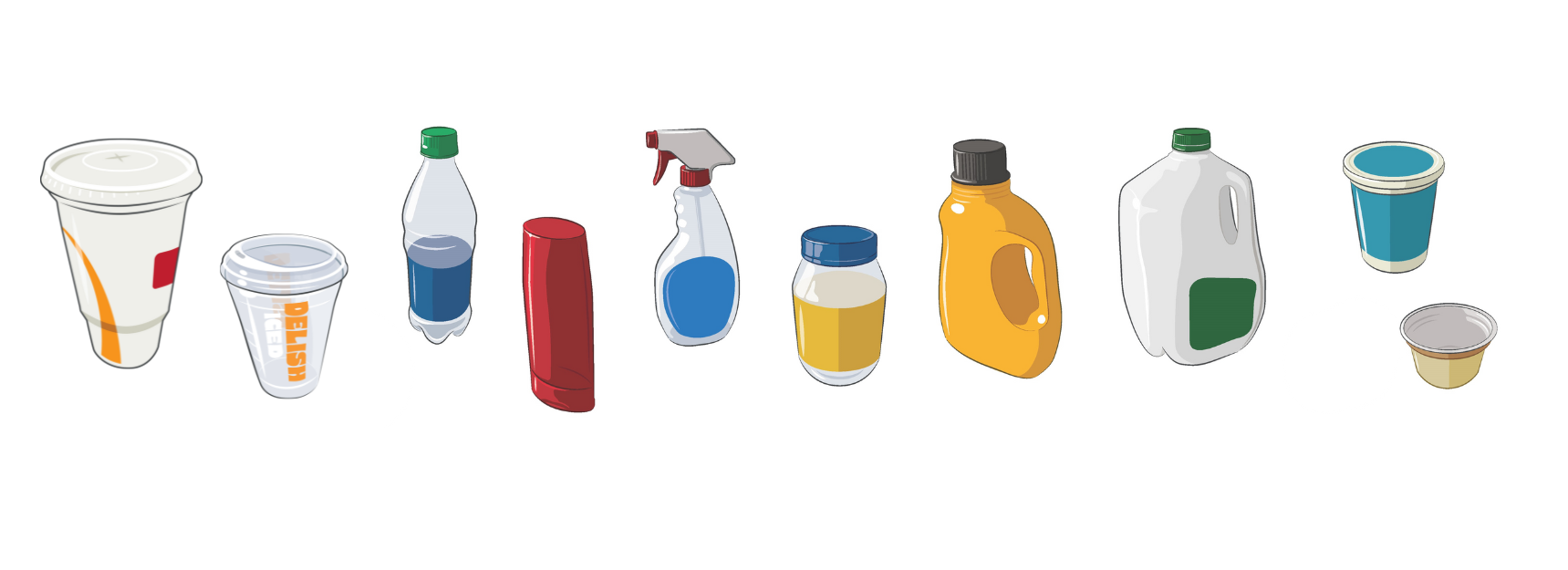
- To-go Plastic Cups (Clear and White): fountain soda, iced coffee, other takeaway drinks (Empty all contents, reattach lids for recycling, and place straws/stir sticks in trash)
- Bottles: beverage, soap, squeeze bottles, and spray bottles (reattach caps, pumps, and lids)
- Jugs: milk, laundry detergent, etc. (reattach caps)
- Jars: peanut butter, mayonnaise, sauce, etc. (reattach lids)
- Tubs: dairy products like sour cream, margarine, yogurt etc. (reattach lids)
- NO colored plastic party cups, plastic bags, black plastic, compostable plastic, foam egg cartons, coffee pods, straws, utensils or prescription bottles
Acceptable Metal Items
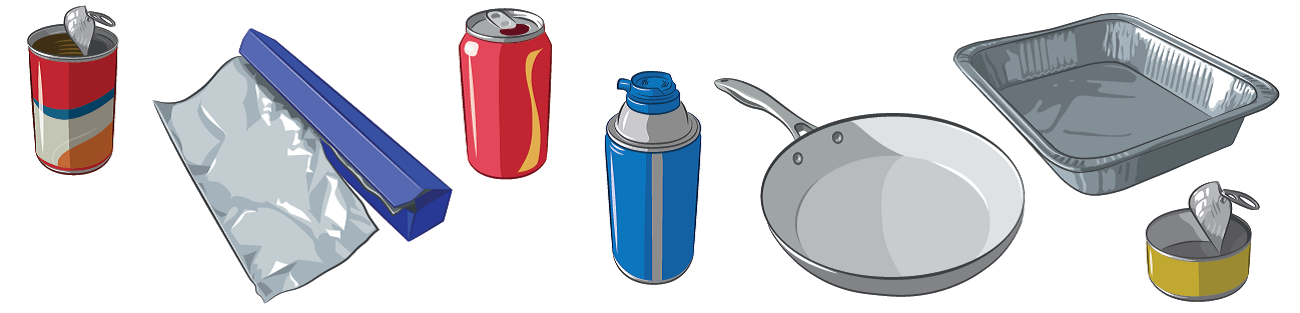
- Metal Food and Beverage Cans: lids are accepted.
- Metal Pots, Pans and Aluminum Foil/Foilware
- EMPTY Aerosol Cans: with caps. NO pesticides or spray paints.
Acceptable Glass Items
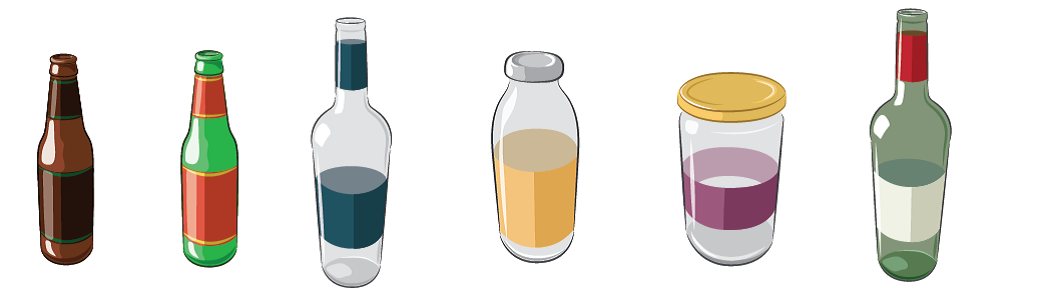
- Glass Food and Beverage Bottles, Jugs and Jars: reattach and recycle lids and caps. No drinking glasses, window glass, pyrex, light bulbs, etc.
Items Not Accepted in MCRC Recycling Program
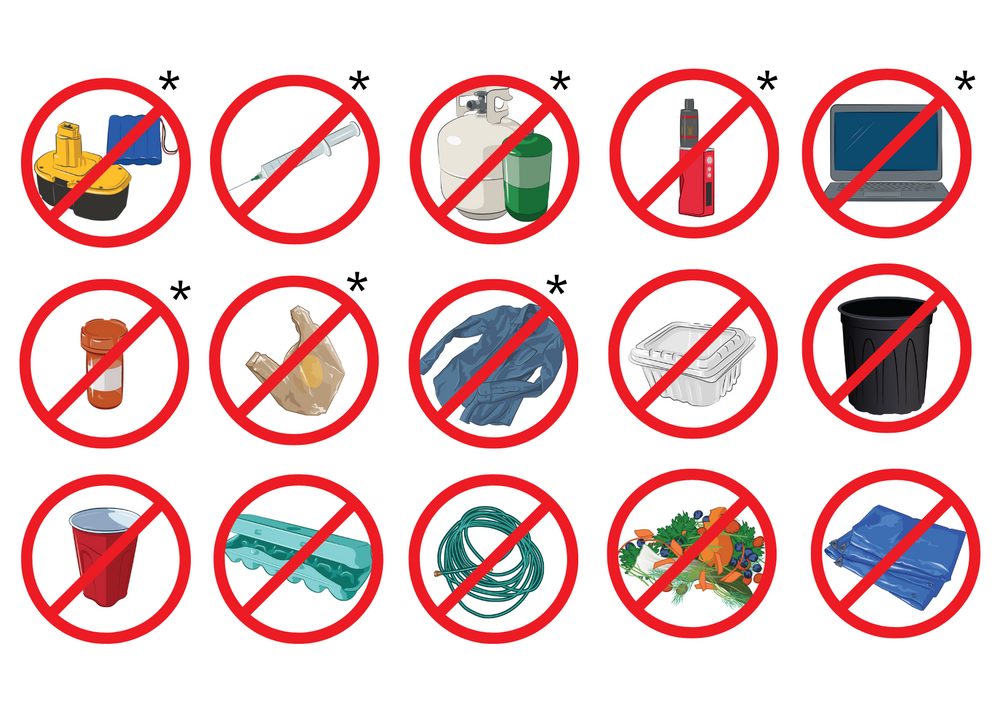
- Lithium batteries*
- Sharps/Syringes*
- Propane tanks*
- E-cigarettes/vapes*
- Electronics*
- Prescription bottles*
- Plastic Bags*
- Clothing*
- Clamshell Containers (with and without attached lids)
- Black Plastic
- Colored Plastic Party Cups
- Foam
- Cord/Hoses/Ropes
- Food or liquid waste
- Tarps or Pool Covers/Liners
*The ecopark will accept some of these items. Click here for more information.
Frequently Asked Questions
Q. What types of cups are acceptable?
Q. What about cup lids, straws, and sleeves?
A. For recyclable cups, first empty all contents, then reattach lids. Paper sleeves can be left on cups for recycling. Discard any straws or stir sticks in the trash.
Q. Are there cups that are not accepted for recycling?
A. Colored plastic party cups, foam cups, and biodegradable cups are NOT accepted.
Q. Why are paper and clear/white plastic cups recyclable now?
A. WM has upgraded sorting technology at the Monroe County Recycling Center to include optical scanners, which allows for reliable sorting of these items. Historically concerns around plastic cups have been the flattening and incorrect sorting into the paper stream. With the advancement of optical scanning at the MCRC, this sortation issue has been resolved and to-go plastic cups are effectively sorted into the plastic container recycling stream.
End market demand for these materials is also growing. U.S. manufacturers want recycled paper and plastic materials to make new products. As the supply of newspaper and office paper continues to decline, reducing supply of recovered paper for tissue mills, demand for fiber from cups has increased. Hot cups are made from white paperboard fibers, among the highest quality paper fibers for recycling.
Paper mills have upgraded their reprocessing technology. Numerous state-of-the-art recycled fiber mills that can better handle coated paper cups have opened in recent years. Others mills have upgraded their equipment to handle these items.
The State of Paper Cup Recycling
ReMA Releases Updates to the ReMA’s ISRI Specifications - Recycled Materials Association
WM Now Accepts To-Go Cups in Curbside Recycling
Q. Where do recycled cups go?
A. From the MCRC, paper cups will primarily be recycled at a paper mill in Ohio and can be made into tissue, paper towels and recycled containerboard.
Clear and white plastic to-go cups will primarily be recycled at a plastic reclaimer in Alabama and can be made into household items such as plastic paint cans, buckets and recycling/trash bins.
Q. Is this a new development in the recycling industry?
A. Only 13% of communities currently accept paper cups for recycling and less than 60% of communities accept plastic cups for recycling, putting Monroe County is at the forefront of this expansion. Paper cups were added to the Recycled Materials Association (ReMa ISRI) single-stream recycling specifications in June, 2025 and polypropylene cups have been added to the ReMA ISRI acceptable plastics specifications. We have worked closely with our recycling partners at the MCRC to determine that paper and to-go plastic cups can be properly sorted, marketed and reprocessed into recycled materials.
ReMA Releases Updates to the ReMA’s ISRI Specifications - Recycled Materials Association
PP Small Rigid Plastic – ISRI SPECS
Q. Do these guidelines apply to all residents of Monroe County?
A. Since the vast majority of Monroe County’s residential recyclables are processed at the MCRC, our recycling guidelines generally apply countywide. They’re designed around our facility's sorting system, local end-market specifications, and reprocessor capabilities. Waste and recycling collection companies may choose from several facilities when transporting materials. Below is a list of collection companies that utilize the MCRC. Monroe County does not endorse any of the haulers contained in the list below — the County is simply confirming that the following haulers are current customers of the Monroe County Recycling Center.
|
Casella Waste |
|
City of Rochester |
|
ecopark |
|
Suburban Disposal |
|
Town of Clarkson |
|
Village of East Rochester |
|
Village of Fairport |
|
Village of Hilton |
|
Village of Scottsville |
|
Village of Spencerport |
|
White Trash Rubbish |
|
WM |
Q. Can I recycle all plastics marked #1-#7?
A. No, the recycling symbol and/or number, does NOT necessarily indicate recyclability curbside. These resin identification codes were created by and for the plastics manufacturing industry, not to communicate to consumers whether an item can be recycled curbside. Recycle plastics by their SHAPE: to-go cups, bottles, jugs, jars, and tubs. There are a number of items marked with a number that are not acceptable for curbside recycling including black plastic, compostable plastic, plastic bags, foam egg cartons, and small plastics like coffee pods and pill bottles.
Q. Why is black plastic not accepted?
A. Black plastics are almost universally not accepted in curbside recycling programs in the U.S. Recycling center optical scanners have near-infrared sensors that can’t distinguish black packaging items from the dark conveyors they travel on through sorting lines. In addition to not being able to effectively sort them, there is not currently a viable end market for black plastic.
Further reading: Can recycling advancements get black rigid plastics off packaging’s blacklist? | Packaging Dive
Q. Can I recycle compostable plastics or bioplastics?
A. No, compostable, biodegradable, bioplastic, or items labeled #7 PLA are NOT accepted for curbside recycling. Bioplastics have different melting points and chemical properties than standard plastics. When recycled alongside traditional plastics, they contaminate and weaken recycled plastics. If you are part of a composting program, inquire about their acceptance of certified BPI compostable materials.
Q. Why can't I recycle berry containers?
A. Plastic clamshells—like berry and produce containers—are made from PET thermoform plastics, which are not widely recycled or designed for true recyclability. Plastic reclaimers need bales to contain more than 90% high-quality bottle-grade plastic; if thermoforms exceed 10% of a bale, the load can be rejected or the thermoforms thrown away. Two states with Extended Producer Responsibility (EPR) policies have currently designated PET thermoforms as “unrecyclable”. Only 30% of North American PET reclaimers can effectively process thermoforms. Currently, there is not a strong end market to turn these materials into new products and they are not considered recyclable.
Further reading and resources:
How it's made video: Plastic bottles
How it's made video: Thermoforms
Increasing the Circularity of #1 Plastic (PET) Recycling - Earth911
PET Thermoform Report Examines Recycling Pathways — RRS
Q. Should I separate my recyclables using plastic bags?
A. NO, keep recyclables loose and unbagged in container! Plastic bags, cords, ropes, etc. wrap around recycling machinery causing facility downtime. Plastic bags and product wrap may be returned to most large retail stores for recycling.
Q. What type of plastic bags/film can be recycled and where?
A. Plastic bags and film should be brought to retailers for recycling. Many other kinds of plastic bags/wrap are accepted in the same receptacle for plastic bag recycling at stores including bread bags, newspaper bags, produce bags, case wrap, cereal box liners and more. If you would like a one-page guide to plastic bag and product wrapping recycling, click here. The ecopark also accepts certain clean, dry plastic bags and product wrapping.
Q. Can I recycle caps and lids from containers?
A. Yes, caps, lids, and spray pumps should be reattached prior to recycling container. Loose caps and lids are not recyclable on their own; they must be reattached to the container to ensure they are recycled and do not end up as litter.
Q. Can foam egg cartons, coffee cups, and packaging material with a #6 be recycled?
A. No foam (commonly known by trade name Styrofoam™) cannot be placed in recycling bins regardless of number. Foam meat trays, egg cartons, coffee cups, takeout containers or other small post-consumer items have no local recycling option and should be placed in your trash. The ecopark will accept clean, white, block packing foam only (often marked #6). Remove all tape and stickers.
Q. Can pizza boxes be recycled?
A. Yes, pizza boxes can be recycled. Grease is OK and does not impede recyclability, as long as no food is remaining. Please remove any wax paper lining and dispose in trash.
Further reading and resources:
WestRock’s study on the impact of grease on recycling post-consumer pizza boxes
Q. Can I place small electronics in my recycling bin or TVs at the curb?
A. No, electronics are not accepted curbside for recycling or disposal. In fact, it is illegal to dispose of a number of electronics curbside. Electronics recycling is now FREE and electronic recyclers, the ecopark, retail stores like Staples and Best Buy, and Goodwill accept electronics in any condition for recycling. Large metal appliances (i.e. white goods) can often be recycled by calling your waste collection provider.
Q. Can I shred personal information before recycling?
A. Yes, shredded paper should be contained in a paper bag and stapled shut (not in a plastic bag.) The ecopark offers a household shredding service and also accepts shredded paper for recycling.
Q. How do I recycle cardboard?
A. Clean cardboard boxes should be flattened and put in or next to recycle bin. Large cardboard pieces should be reduced to 2 feet by 4 feet and bundles should NOT be tied with string or twine.
Q. Why are the guidelines always changing?
A. As markets develop for new types of packaging, Monroe County works with the operator of the Recycling Center to identify opportunities to recycle more. Guidelines may also change to encompass more acceptable recyclable materials due to advances in recycling sorting technology. Differences exist between municipalities and collection company guidelines due to access to markets, sorting technology, and composition of the waste stream.
Q. Should I place my recyclables at the curb on very windy days or if a storm is forecast?
A. Use your good judgement on whether to delay your recycling. Recyclables that blow around the neighborhood are litter. Avoid putting bins out the night before collection if a storm is forecast to reduce litter.
Q. Where can I get a new/replacement recycling container?
A. Contact your waste collection provider. Containers may be purchased at home improvement stores but always check with your recycling collector first to ensure program compatability.